The sun is barely up in Glenwood Springs, Colo., and I’m cursing myself for not buying a bottle of booze the night before. After all, you don’t bring flowers to pay respects at a legendary Wild West gambler and gunslinger’s grave, especially not the resting place of John Henry “Doc” Holliday.
Inspired by stories of the Old West and movies like “Tombstone,” where Val Kilmer played Doc with laid-back, icy menace, I’m keen to see Holliday’s grave before our small group of travel writers prepares to ride out — by van, rather than horses — for more exploring in Colorado.
Nobody knows exactly where Holliday rests in Linwood Cemetery, a short hike up a steep trail near downtown. There’s only a white marble marker with his name that confirms he’s somewhere in the overgrown graveyard. There are tales of a recalcitrant gravedigger who wasn’t very good about keeping records. As with most things we encounter in Colorado, Holliday’s link to Glenwood Springs had nods to history and American frontier folklore.
Our trip is taking us by road and rail from Denver, the modern Mile-High City, to the historic mountain town of Durango, giving us a taste of the Old West. Traced on a map, our flat C-shaped route travels west and then south, through some of Colorado’s most thrilling scenery.
The state is home to 58 “fourteeners” (mountains more than 14,000 feet, or over 4,200 metres, above sea level), along with expanses of desert dotted with sagebrush, massive red rock shapes and flat-topped mesas. I gaze out the windows of our van and imagine cowboys herding longhorn cattle or galloping by, full tilt, on horseback.
Along the way, our itinerary stops in Colorado mountain towns, dreamlike settings in deep valleys. Dozens of these sites also have mineral hot springs spas and resorts, so you’re never far from a relaxing and healthful soak.
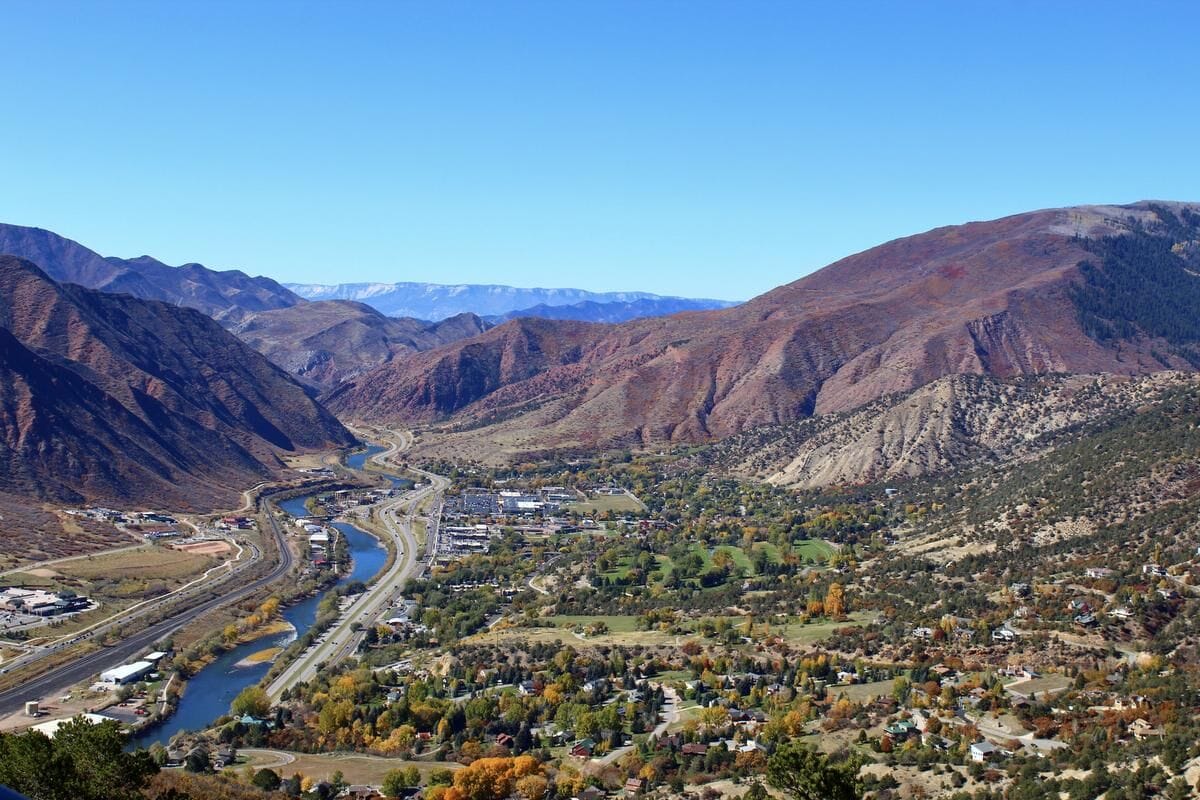
The waters helped build Glenwood Springs, which changed its name from Defiance in the late 19th century to entice visitors to its geothermal pools. The Ute Indigenous people, who had used the healing springs and natural steam caves for centuries, called them yampah (big medicine).
The hot springs brought Doc Holliday here, too. He hoped the Glenwood Springs waters and steam caves would cure his tuberculosis. They didn’t. He died in a main street hotel in 1887.
The Glenwood Hot Springs Resort, built in 1888, still draws wellness seekers to the largest natural hot springs pool in the world. I decide to try the newish Iron Mountain Hot Springs just outside the town centre instead. It’s family friendly, but I prefer the adults-only area, where we sip cocktails and hop between a series of small free-form pools built along terraces overlooking the Colorado River.
About an hour’s drive from the hot springs, we find a place I didn’t expect in the Wild West: wine country. There are 30 vineyards around the small Western Slope town of Palisade, the rows of grapes rising to red mesas and mountains. Surprise number two: they make good wine in Colorado. I enjoy the Colterris 2020 Coloradeaux red blend with more than one meal.
Close by, near the city of Grand Junction, the Colorado National Monument is another revelation. It isn’t a marble statue, as the name implies. The protected site is often called a smaller version of the Grand Canyon, but there’s nothing miniature about these canyons, cliffs, and towering rock formations with names like Independence Monument and Kissing Couple.
We sit on a flat ledge a safe distance from the rim and look across the dramatic landscape, shaped by more than a billion years of weathering, erosion and collapse. Trails wind far below, along the canyon floor. It’s humbling to see something so ancient and magnificent.
Before there were road trippers, people travelled by rail to reach remote Colorado mountain towns. Our route includes a journey on the historic Durango & Silverton Narrow Gauge Railroad from Silverton to Durango. The line has been hauling freight and passengers through the Rockies since 1882.
But first, to catch the train in Silverton, we must drive the Million Dollar Highway, the white-knuckle route from the mountain town of Ouray. Originally carved out as a wagon trail to get supplies to mines in the 19th century, it has to be one of the world’s most exhilarating — and harrowing — drives.
Some say the highway gets its name from the cost to build it, reportedly a million per mile. Others credit the million-dollar views. Others have said they wouldn’t drive it again for a million bucks. This is a go-slow road, where snaking hairpin turns travel past alpine meadows and through the San Juan Mountains’ passes as the road reaches elevations of more than 3,300 metres. There are no guardrails.
In Silverton (population: 650), we have time to stroll the main street of this charming, isolated mountain town, which was born with the mining boom. Shops, bars and restaurants occupy colourfully painted Victorian buildings. It’s also a hot destination for skiers and snowboarders.
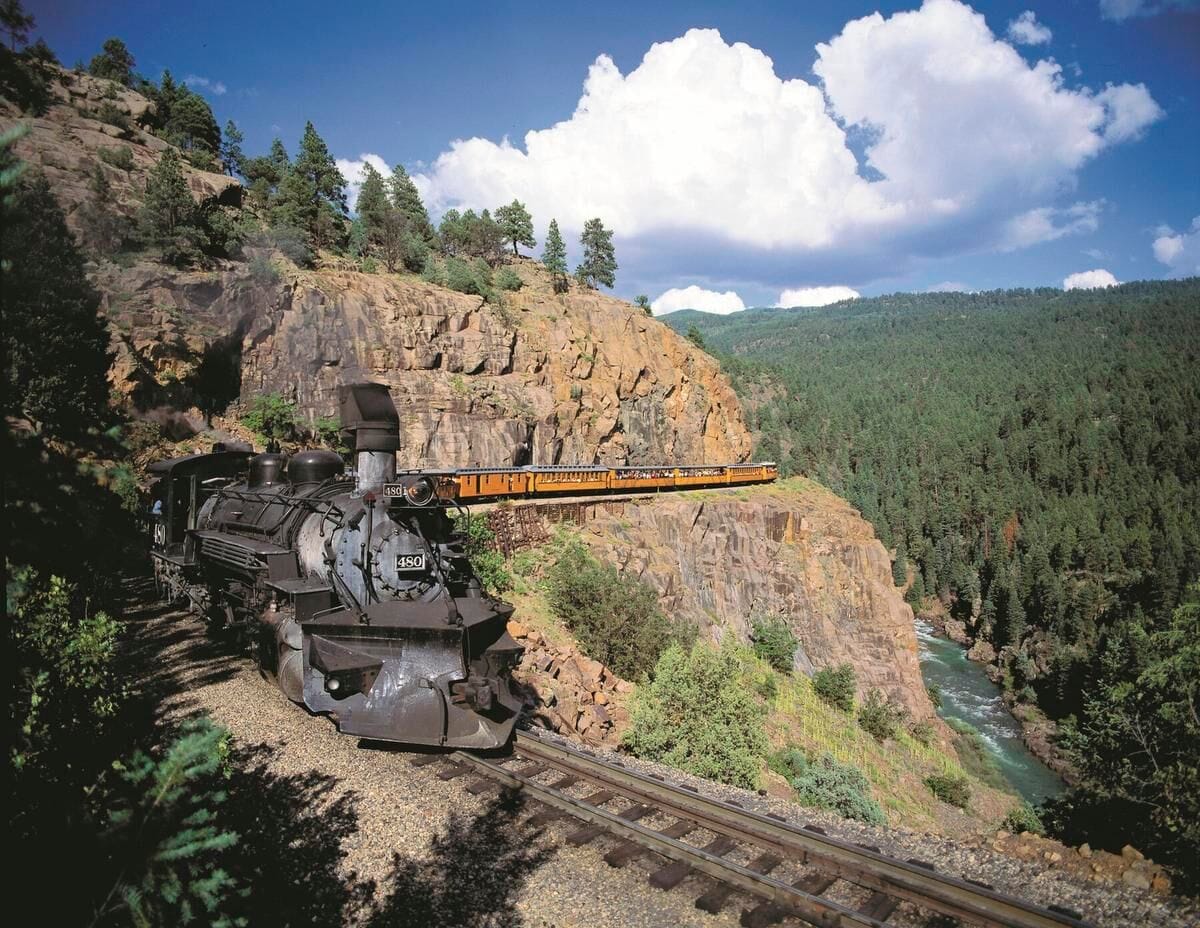
We board a long carriage on the train. The open windows offer great views of the vintage steam engine on turns and along canyon-hugging rails ahead as it puffs through Animas Canyon. The leisurely, rail-rocking journey to Durango, some 70 kilometres away, feels like an old frontier painting come to life.
We sip locally brewed beer as the train follows the churning Animas River, spotting the mountainside remains of ghost towns and mine sites abandoned after the collapse of the 1800s gold rush and silver boom.
Long before miners and railroads led to the building of frontier towns, the Ancestral Puebloans, in what’s now Mesa Verde National Park, were creating masterpieces of architecture with their cliffside dwellings in the 12th century. Our travels take us to the largest cliff dwelling in North America, Cliff Palace, a powerful link to the Indigenous people who began to live here more than 800 years ago.
“Every time I come here, it’s the same. I’m excited. I get goosebumps,” says National Park Service ranger Michael Piper before he leads us along narrow paths and up a series of ladders to reach the sacred structure.
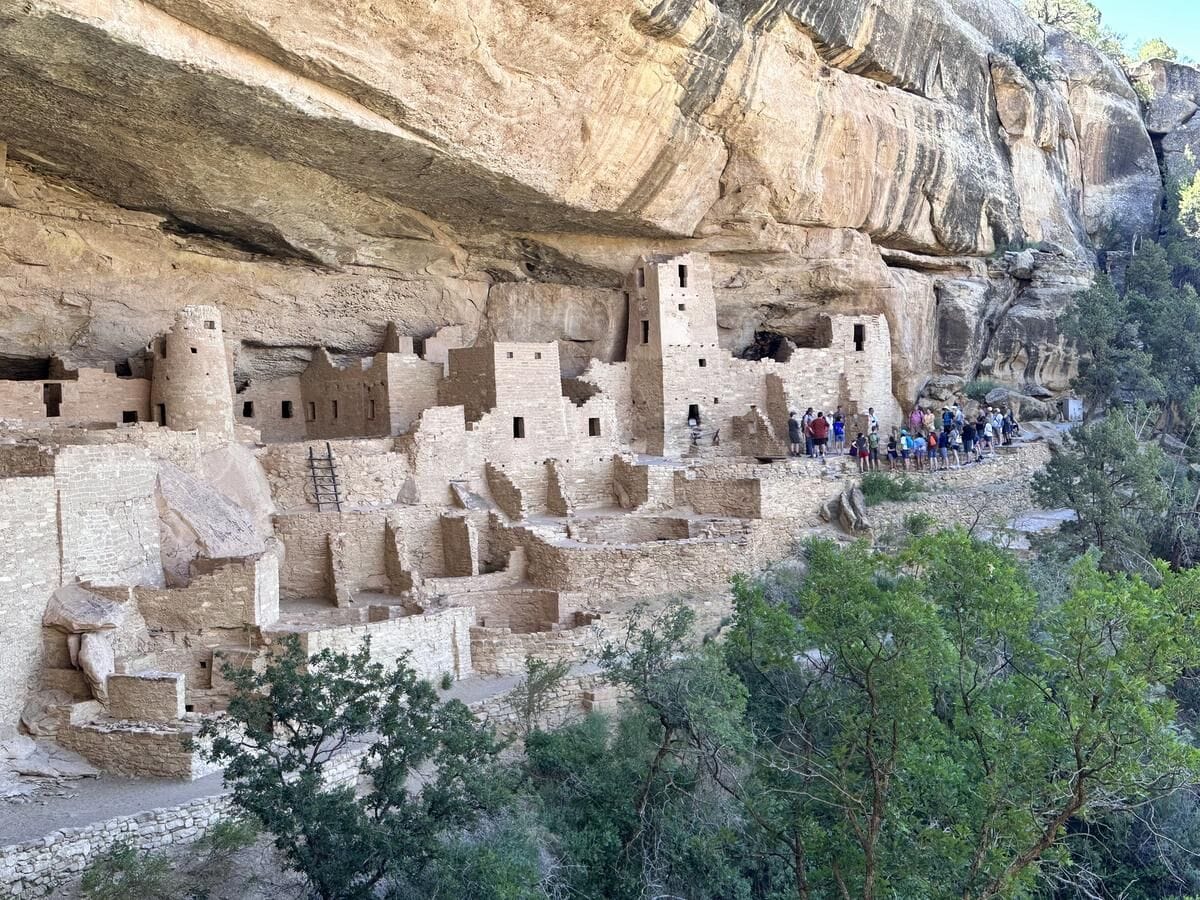
Built from 1190 to 1260, Cliff Palace has 150 rooms. An estimated 100 people once lived there. Was it a village, or a place for higher learning, administration or ceremonies? Also mysterious is the reason why the site was abandoned around 1300.
The power of the ancestral people who built Cliff Palace feels palpable as I stand inside the cliff hollow, marvelling at towers and rooms that slot together perfectly. We gather around the remains of a kiva, one of 23 circular underground rooms used for ceremonial practice. Think about the people who were here, Piper says. Imagine their children, the cooking fires, the conversations.
As we climb up the steep, narrow stairway, carved into the rock, to reach the top of the cliff, I instinctively reach out to steady myself. My hand slips into a small groove.
“That’s them,” Piper says of the slice, carved from the red rock by a Cliff Palace inhabitant. “It’s how they climbed up and down.” It feels like a handhold on Colorado history.
I travelled as a guest of the Colorado Tourism Office, which did not review or approve this article.
As Featured In: